
Cheaper crude oil weakens rupee even as core sector growth revives

Among 30 Sensex firms, UltraTech Cement, Tech Mahindra, HCL Tech, Tata Consultancy Services, Eternal, Asian Paints, Tata Steel and Kotak Mahindra Bank were among the biggest gainers. Tata Motors, Adani Ports and Sun Pharma were the laggards.

Equity benchmarks Sensex and Nifty on Thursday gave up all early gains to settle lower as surging oil prices amid the ongoing conflict between Russia and Ukraine hit investor sentiment. The 30-share BSE Sensex started the trade on a higher note and jumped 527.72 points in morning deals to a high of 55,996.62. However, during the afternoon trade it surrendered all its early gains and finished at 55,102.68, lower by 366.22 points or 0.66 per cent.

Wholesale price inflation dropped to 0.85 per cent in April as prices of food articles, manufactured products, and fuel eased, government data showed on Wednesday. WPI-based inflation was 2.05 per cent in March. It was 1.19 per cent in April last year.

International oil prices jumped to the highest level since 2014, topping $87 a barrel but domestic petrol and diesel prices remained unchanged for the 74th day in a row - a freeze that may be linked to ensuing assembly elections in states like Uttar Pradesh and Punjab. Brent - the key global oil benchmark - soared to $87.7 per barrel mostly due to rising geopolitical tensions and supply-side disturbances due to Yemen's Houthi group's attack on oil facilities in the United Arab Emirates. Also, global inventories are waning. The attack, some analysts believe, may lead to more hostile behaviour between the two power centres in the Middle East - Iran and Saudi Arabia.

Oil prices were poised for a third day of gains following a rise of more than 4 percent last week after Islamic militants seized much of northern Iraq as Baghdad's forces there collapsed.

oil market remained under pressure and big gains are unlikely.

Every dollar increase in crude oil price will add Rs 4,000 crore to the overall underrecovery.

The LPG squeeze on India's restaurant sector is the quotidian face of a deeper crisis.

Israel and the United States had a plan. Iran punched back. And now the Gulf is reeling, the world is beginning to feel the pain and, as on date, no one in Washington or Tel Aviv appears willing to admit that the punch has landed, notes Prem Panicker, continuing his must-read blog on the war in the Middle East.

Indian refiners are likely to import 2-2.2 million barrels per day of Russian crude oil in June - the highest in the last two years and more than the total volumes bought from Iraq, Saudi Arabia, the UAE and Kuwait, preliminary data by global trade analytics firm Kpler showed.
Oil prices hit two-and-a-half-year highs in Asian trade on Friday as violence continued to wrack the Middle East and threatened to spread to other bigger oil producers in the region, analysts said.

Even as Russia and West Asia have been slugging it out for market share in India to sell their crude oil, the US is quietly making its moves on the sidelines. The US has doubled its share of the Indian crude market in the past few months, according to industry sources and ship-tracking data. Some of the increase in America's market share may have come at the expense of Russia, India's biggest crude oil supplier, said industry sources.

Russia's state-owned oil firm Rosneft has agreed to supply up to 500,000 barrels per day (bpd) of crude oil to Indian upstream oil and gas major Reliance Industries (RIL) in the largest-ever energy deal between the two countries, Reuters reported on Thursday. The 10-year agreement amounts to 0.5 per cent of global oil supply and is valued at roughly $13 billion per year at current prices, it said.

The value of the rupee, which has slipped to the 92 per dollar mark, does not accurately reflect India's stellar economic fundamentals, the Economic Survey said on Thursday.

'The US is strongly placed to expand its crude supplies to India.'

Oil prices continued their rout on Tuesday with Brent crude and U.S. WTI both falling to their lowest in almost six years as a big OPEC producer stood by the group's decision not to cut output to tackle a glut in the market.

The Indian economy is likely to grow at 7.4 per cent in 2025-26, up from 6.5 per cent in the previous fiscal, mainly on account of better performance of manufacturing and services sectors, as per the government data released on Wednesday.

From the Sensex pack, Asian Paints, UltraTech Cement, Power Grid, ICICI Bank, Reliance Industries, Hindustan Unilever, Bharat Electronics and Sun Pharma were among the major gainers. In contrast, Trent, Eternal, Axis Bank and Titan were among the laggards.

WPI inflation data, trading activity of foreign investors and global cues would dictate trends in the stock market this week, analysts said.

When everyone has footage and no one can verify it, the loudest voice wins, notes Prem Panicker who begins a daily blog on the War in the Middle East.

The delegations from the US and Iran head to Islamabad on Friday, carrying a ceasefire that is already fraying, a Strait that is technically open and practically closed, and a negotiating agenda that would challenge even parties actually negotiating in good faith, which these groups are not. Prem Panicker continues his must read blog on the Iran War.

Analysts forecast the fuel at $85 a barrel in 2015 and $90 a barrel in 2016; politics, demand-supply to pressure crude.

Marico is expected to post high single-digit volume growth in the India business in the July-September quarter. However, it is expected to moderate sequentially, the company said in its quarterly update on exchanges.

Equity markets will keenly track outcome of the US Federal Reserve policy meeting this week amid heightened expectations of an interest rate cut along with WPI inflation data, analysts said. Any further development on the USndia trade front would also drive trends in the equity market, experts said.
The government on Friday cut the windfall profit tax on locally produced crude oil in line with a fall in international rates, and reduced the levy on export of diesel and jet fuel (ATF). At the fifth fortnightly review, the government reduced tax on domestically-produced crude oil to Rs 10,500 per tonne from Rs 13,300 per tonne. The levy on the export of diesel was reduced to Rs 10 per litre from Rs 13.5. Also, the tax on Aviation Turbine Fuel (ATF) exports was cut to Rs 5 a litre from Rs 9 with effect from September 17, according to a finance ministry notification issued late Friday night.

The relations between New Delhi and Washington are on a downturn after Trump doubled tariffs on Indian goods to a whopping 50 per cent, including 25 per cent additional duties for India's purchase of Russian crude oil.
Fears of an economic slowdown in the US, and a consequent spread of the crisis to Europe and other parts of the world, resulted in oil prices falling over 12 per cent since Monday, the largest weekly fall since early 2004.

'As matters stand, Russia and Saudi Arabia, two of the world's biggest oil producers, are set for a hard landing as they didn't diversify their economies as much as they should have when the oil prices were booming.'

From the Sensex pack, Asian Paints, NTPC, Reliance Industries, Tata Steel, Bajaj Finserv, Hindustan Unilever, Sun Pharmaceuticals, Adani Ports & SEZ, Axis Bank, Tata Consultancy Services, Titan and Bajaj Finance were the major gainers. Tech Mahindra, Kotak Mahindra Bank, Zomato, Tata Motors, and IndusInd Bank were the laggards.
Crude oil prices have fallen to below $113 a barrel this week from all-time high of $147 per barrel witnessed last month. The basket of crude oil India buys averaged $109.88 per barrel, down from $119 a barrel price on June 4 when petrol, diesel and domestic cooking gas prices were raised.

On the other hand, Bharat Electronics, Kotak Mahindra Bank and Axis Bank were the laggards. In Asian markets, South Korea's Kospi, Japan's Nikkei 225 index, Shanghai's SSE Composite index and Hong Kong's Hang Seng settled higher.

Fight on toward goals that keep receding, or exit with most objectives unmet. Trump is agitated, his poll numbers falling below the Plimsoll line, his base fractured between those who back the war and those who remember that he campaigned on ending them.
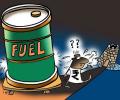
A swift recovery in oil demand in India is not only helping the stability of the global market, it is giving huge fiscal headroom to the government in terms of additional excise duty.

A US official has stated that India's continued purchase of Russian oil is a point of contention in the relationship between the two countries, as it helps fund Russia's war efforts in Ukraine.

Stock market sentiment is likely to remain optimistic going ahead, though some consolidation cannot be ruled out after the recent sharp rally in the benchmarks, analysts said. According to experts, the Nifty and Sensex could indeed move towards new record highs before the end of the year, if global cues stay supportive, crude oil prices remain benign and there is continued domestic earnings momentum.

After prospects of a higher subsidy outgo on food and fertilisers, the government is faced with the spectre of a higher petroleum subsidy. Rising crude oil prices and its inability to increase fuel prices is all set to spoil the government's subsidy calculations. The country meets 80 per cent of its crude oil demand through imports.
Remember that oil prices do not knock through into economies straight away, the impact is delayed, maybe as much as 18 months in some cases.
In talking about the market in crude oil we often looks for items, events, and structures that repeat themselves. We pin some kind of faith on them because we are unable to see the future with any real clarity. For regular readers of this column, you will realise that this is the start of an explanation as to why we predicted crude oil would be $66.60 at Christmas.
 © 2026 Rediff.com - Advertise with us - Disclaimer - Privacy Policy - Sitemap - Feedback - About us - Terms of use - Grievances